First help comes from everybody. Yet many individuals with specials needs still face preventable obstacles when they try to acquire a first aid certificate or keep their CPR abilities present. The outcome is predictable: less qualified -responders at home, at work, and in the community. I have instructed first aid and CPR courses in corporate rooms, community centers, and small living-room with a healthcare facility bed in the edge. The difference in between an excellent class and a comprehensive class comes down to prep work, design, and regard for exactly how individuals actually live and move.
This guide distills what works on the ground. It talks with training providers constructing programs, to special needs advocates recommending organizations, and to individuals choosing which first aid course will absolutely serve them. The objective is not to reduce bench. We hold the exact same end result: secure, efficient first aid and CPR. We transform the path to obtain there.
Why the basic model leaves people out
Traditional first aid courses still assume a slim trainee profile: ambulant, spotted, hearing, neurotypical, and cost-free to kneel on the flooring for lengthy stretches. The design follows that presumption. Instructors speak to slides for lengthy blocks, then switch to timed drills on low manikins with limited evaluation manuscripts and marginal adjustment. An individual utilizing a wheelchair or with restricted hand strength, reduced vision, or sensory processing needs finds the surprise message promptly: you are an edge case.
The expense shows up in quiet means. A deaf individual lip-reads and misses side directions during a loud situation, so the assessment flags an error. A person with minimal reach can not carry out compressions on the flooring manikin with proper depth, although they can deliver efficient compressions on a raised surface area. A neurodivergent student excels in one-to-one training however falls short a team circumstance with split sound that triggers shutdown. None of these end results reflect capacity in an actual emergency situation. They show a training layout that did not make up disability.
What inclusion appears like in practice
Inclusive first aid training transforms the atmosphere and the approach prior to it alters the analysis. The most trustworthy wins seldom set you back much.
Room setup initially. Make certain clear 90-centimeter pathways, no cable television threats, and space for side transfers to and from mobility devices. Offer diverse seating heights and 2 flexible tables. Contend least one adult manikin that can be elevated to waist height with a steady table or a committed stand, plus a kid and baby manikin in a similar way adaptable. For AED method, position the device on a folding table available rather than on the floor.
Materials matter. Large-print handouts, a digital version compatible with screen viewers, and high-contrast slides help greater than just low-vision individuals. A pocket talker or loop system and tidy inscriptions for any kind of videos support hard-of-hearing learners. Visual schedules decrease anxiety for those who favor predictability. For responsive knowing, a ribs-and-sternum tactile model instructs hand placement well for both blind participants click here and any person that discovers best by touch.
Instruction shifts from lecture-heavy to multi-sensory. Show, narrate, show once again, and allow people exercise in varied settings. Encourage students to ask for the adaptation they require, after that bake those adjustments right into your plan so nobody seems like an unique case.
Assessment stays extensive, however it measures results that map to real emergencies. Can the student acknowledge cardiac arrest, telephone call for assistance, begin compressions, use an AED, control blood loss, and position a subconscious individual to keep an open respiratory tract, utilizing methods readily available to them? If of course, they have attained the function of a first aid and CPR course.
Designing programs that match real bodies and actual contexts
Language in first aid training can leave out without any individual discovering. Phrases like "need to kneel beside the patient" or "drag the target to security" neglect flexibility constraints and safer choices. Replace technique absolutes with objective declarations. Instead of "area hands over the sternum with straight arms while stooping," attempt "deliver compressions at the right price and deepness using a secure body placement for you." That shift permits seated compressions, chest-height manikin arrangements, or supported standing.
Breathing checks need comparable quality. For a blind trainee, "try to find chest surge, listen and really feel" is not actionable. Instruct tactile chest activity examine the upper abdomen or lower ribs and risk-free placing for that check, paired with clear time hints. For a deaf trainee, a flashing metronome application readied to 100 to 120 beats per min builds trusted compression rhythm without relying on a music cue.
AED self-confidence often increases or falls on mastery and reach. Offer several fitness instructor AED versions and pads with larger pull tabs. Practice pad placement while seated, with the patient on a bed or cot elevation, so learners who can not kneel still build automaticity. If a pupil has one practical arm, teach pad application with a peel-press approach from the edge, sliding the pad from the backing with the chin supporting an edge, then smoothing with the heel of the hand.
Bleed control is another location where comprehensive technique changes the outcome. A person with restricted grip could not maintain the stress required with a single hand. Show them exactly how to support their forearm over the wound and lean in, or just how to use a pressure dressing with a windlass that can be tightened utilizing take advantage of as opposed to finger toughness. For individuals with tremor, a Velcro-based tourniquet might be extra convenient than a buckle type.
Recovery position deserves special focus. Lots of people with specials needs have actually integrated joints, spasticity, or implanted tools that transform risk-free rolling technicians. Instruct numerous side-lying options, including pillow or apparel as assistance props, and how to stabilize the head and hip without force. If the person uses a mobility device and can not be lifted securely, focus on airway upkeep in the chair: chin lift, strap removal or loosening, slight onward turn with support, and consistent monitoring till help arrives.
What students with handicaps consistently ask for
The exact same demands appear year after year when we request responses. They are clear, practical, and commonly simple to meet.

- Transparent alternatives at enrollment: an ease of access checklist that covers vehicle parking, lift access, toilets, area layout, manikin elevation alternatives, lights, audio assistance, captioning, and an invite to demand specific adjustments. Predictable breaks and sensory control: set up quiet time every 60 to 90 minutes, dimmable lights, and minimized background songs during drills. Alternative method setups: manikins at flexible heights, sturdy chairs without armrests for transfers, and area to practice log rolls with moving sheets instead of floor-only drills. Assessment versatility with comparable outcomes: the ability to show compressions seated, to verbalize actions clearly when responsive demo is risky, and to use assistive technology where it does not alter the skill outcome. Respectful communication: teachers who ask before touching, explain each step out loud, and treat assistive devices as component of the individual's body and autonomy.
How to adjust CPR training without reducing standards
CPR quality is quantifiable. Compression deepness, rate, recoil, and very little interruptions issue. Excellent comprehensive method keeps those metrics front and center, then discovers the body technicians to obtain there.
Start with altitude. Raising the manikin to mid-thigh or waistline degree frequently allows a seated rescuer to drive compressions with upper body weight, not simply arm muscles. Utilize a non-slip mat under the manikin to stop drift. For brief stature or minimal reach, bring the manikin closer to the table edge, breast facing the rescuer, so the shoulders stack over the heel of the hand.
Rhythm help need to be silent and visual when required. A wrist-based metronome with resonance aids a deaf or hard-of-hearing rescuer, and it additionally helps in noisy settings. Pass over loud for learners that take advantage of auditory pacing. Supply real-time feedback manikins when readily available, however do not make green-light reliance the objective. Show how proper body feel maps to the comments so students can execute without devices.
For students with discriminatory weakness, alternating hands and adjust position. Some will accomplish much better deepness making use of a one-hand strategy with the other lower arm braced throughout the breast bone to add mass, specifically in kids and small adults where excessively deep compressions are a threat. Teach when and where that is ideal, and cpr training Mandurah exactly how to switch rescuers successfully if a teammate is available.
Mouth-to-mouth ventilation is a typical obstacle for those who can not form a seal or sustain breath pressure. Prioritize compression-only CPR for adult abrupt heart attack when there is limited capability for rescue breaths. When breaths are indicated, such as in sinking or pediatric apprehension, show bag-mask air flow with strap-assisted seal for those with limited hand stamina, and two-rescuer strategies that designate the seal to the stronger collection of hands.
AED pads on hairy chests or with implanted tools develop useful questions. Demonstrate pad positioning around a visible pacemaker or implant, and make use of the extra pad technique with firm press and fast elimination to clear hair patches. For someone with low finger mastery, pre-peel a corner of the pad backing for speed during drills, after that practice the complete peel once the series is memorized.
Beyond CPR: first aid skills with typical adaptations
Choking reaction shows well with responsive hints. For blind pupils, demonstrate hand positioning by guiding their hands to spots on a consenting volunteer or an upper body trainer, always with authorization. For mobility device individuals, reveal the seated Heimlich version making use of breast thrusts from behind or from the front with the rescuer stooping or seated, depending on family member height. Paper these options in the handout so students do not have to count on memory.
Epilepsy first aid intersects with movement gadgets regularly than many fitness instructors realize. If a seizure starts while a person is making use of a mobility device, do not eliminate them unless there is instant risk you can not alleviate. Protect the chair, pad sharp sides with garments, sustain the head, monitor respiratory tract, and time the occasion. Later, look for injury, rearrange for convenience, and regard post-ictal disorientation. Develop a situation around this so learners method real choices.
Diabetes administration in course need to surpass textbook indicators. People with low vision may depend on tactile functions of glucometers. Others use continuous sugar displays with alarm systems. Educate how to acknowledge hypoglycemia by behavior and speech patterns, when to provide fast-acting sugar, and how to browse permission with somebody that shows up confused. Bring 15-gram glucose alternatives with clear labels and big print.

Wound care invites creative thinking. For a participant with limited pinch strength, pre-tear tape strips and demonstrate how to anchor dressings with a wrap instead of numerous little sticky tabs. For an amputee or somebody making use of a prosthesis, go over stress factors and skin shear, after that exercise dressings that stay clear of those zones. Highlight infection control techniques that function seated: hand health with pump bottles, easy-to-open handwear covers, and a designated sharps container if training includes epinephrine auto-injectors.
Mental health first aid syncs naturally with disability inclusion. Instruct grounding methods that can be utilized from a seated setting and manuscripts that respect autonomy. A tranquility, descriptive voice can de-escalate efficiently: "I am below, I will certainly move to your left so you can hear me much better, I am mosting likely to talk gradually and keep my hands visible."
Certification, evaluation, and fairness
Most first aid and CPR courses culminate in an assessment straightened with a criterion. Numerous standards enable assessor discernment about position, tools height, and adjusted interaction, as long as the skill outcome is unmodified. The key is clear documentation.
If a learner carries out compressions seated at an elevated manikin and continually meets price and deepness, record that they achieved CPR standards utilizing a seated setting with a raised surface. If they demonstrate AED use with an alternative pad application sequence that still results in analysis and shock distribution, note the equivalence. Be straightforward regarding any limits, such as a learner that can start compressions but exhaustions early and requires a group strategy. Credibility develops trust and helps the student make real-world plans.
For theory tests, give large-print or digital versions suitable with screen readers. Allow added time when reviewing speed, electric motor control, or interpreter relay requires it, as long as timing is not crucial to security. For deaf pupils, companion with certified interpreters and provide access to the exam products beforehand under privacy so technological terms are consistent.
Renewal requirements commonly press people out. A cpr refresher course each to three years is basic, yet the obstacle is rarely expertise degeneration. It is gain access to. Offer short-format refresher courses with focused sensible stations, mobile distribution for neighborhood groups, and remote theory updates with in-person abilities checks that include the very same flexible arrangements as the original course. When the path back in is practical, people remain current.
Working with interpreters, assistance employees, and personal assistants
A comprehensive class welcomes the team around a learner. Interpreters and assistance employees must be informed on the day's flow, security guidelines, and their function during hands-on abilities. Make it clear that the learner, not the assistant, will certainly complete examined actions. Throughout drills, place the interpreter within the learner's aesthetic field, not behind tools. If the support employee handles transfers or settings, build that right into the scenario so you can examine the interaction as well as the skill.
For learners that use voice result tools, permit additional time for them to communicate with classmates throughout team-based circumstances. Emergencies are social. The capacity to supply a clear direction with a gadget matters and deserves practice.
Selecting a program and a company you can trust
Not every first aid training supplier is ready to deliver comprehensive classes. You do not require to presume. Ask sharp, functional questions prior to you sign up. If the responses are unclear, keep looking.
- What specific adjustments do you provide for CPR method and assessment, consisting of seated or elevated-surface compressions? Do you provide materials in big print and digital formats suitable with screen readers, and are video clips captioned? Can you verify available car park, lift access, and an easily accessible toilet within the same floor or with trusted elevator access? How do you deal with interpreters or support employees in class, and can they go to at no added charge? Will my certification be the same requirement as other students when I show the needed end results utilizing adaptations?
An experienced first aid pro will certainly address without defensiveness, name the tools they make use of, and invite you to share what functions ideal for you. Numerous will additionally be willing to run a personal or small-group session if your needs are best met with a silent environment or customized pacing.
Building inclusive scenarios that still really feel real
Scenario style separates average programs from memorable ones. For comprehensive training, manuscripts need several legitimate services. A presented heart attack in a confined restroom is a constant choice in mainstream training courses, yet it is a poor opening circumstance for a mobility device customer. Rather, utilize a living room design with furniture that can be changed, then position questions: what can we move, that can call, where can we put the patient for compressions that work for this team?
Adjust sensory lots intentionally. Some learners benefit from sensible noise and overlapping hints. Others will certainly close down. Deal 2 tracks for circumstances, one high-stimulus with alarms and onlookers, one low-stimulus with clear voice triggers. Allow learners decide in, or progression from quiet to loud as confidence grows.
Write circumstances around assistive tech. A choking case with a ventilator in place, a loss with a service canine present, a diabetic reduced while a continuous glucose monitor alarms, or an anaphylaxis event utilizing a fitness instructor auto-injector. Method approval and device safety in addition to the core first aid steps.
Risk, freedom, and the values of help
Inclusive training courses have to speak honestly regarding risk and dignity. A person with brittle bones might choose that floor transfers are not acceptable outside a dire airway emergency situation. A person with a spinal fusion may like to keep compressions elevated and ask for extra aid as opposed to risk a self-transfer. These are not failings. They are notified choices.
Teach the principles that control difficult telephone calls. Maintain life, stop further injury, and promote healing. After that layer in autonomy and permission. If a conscious individual declines aid, respect that choice unless ability is plainly damaged. If you touch, explain what you are doing and why, even if the person shows up less competent. For blind or low-vision individuals, keep up a running discourse as you assess and deal with, so they are not left in silence.
Instructors sometimes are afraid that excessive subtlety will perplex learners. In technique, people deal with subtlety well when it is anchored in function. "We do this to maintain air moving. We do it in this manner since your shoulders can not tolerate stooping. Here is just how we understand it is working."
Measuring influence and enhancing over time
Track the basics. How many learners with declared disabilities enroll, total, and re-enroll? What adjustments did you make use of most, and where did devices fail? Gather responses at 2 factors: completion of course and 30 to 60 days later, when people have actually tried to use what they discovered at work or home.
Aim for details renovations each quarter. For instance, lower average manikin arrangement time for seated compressions to under five minutes by pre-rigging stands. Change any video clip without tidy, precise subtitles. Include a gladstone first aid course responsive breast bone design to your kit. Adjust your real-time responses manikins for level of sensitivity to ensure that seated compressions rack up precisely and fairly.
When a gap creates a student to fall short, possess it. Deal a no-cost retest with the ideal setup, and record what you altered. Word travels quick in handicap communities. Capability with humbleness gains trust.
Cost, logistics, and business case
Inclusion is not charity, it is quality. The added equipment is small: a couple of flexible tables, a manikin stand or 2, non-slip floor coverings, a tactile breast design, a pocket talker, and published large-format materials. Expect an initial expense in the reduced four numbers for a tiny training package upgrade. Interpreter solutions include price per session, but can be pooled over teams or offset by targeted scheduling.
The return is genuine. Training courses with comprehensive layout fill seats that were formerly vacant. Corporate clients with ease of access plans notification and stay devoted. Extra notably, your graduates can actually execute first aid and cpr in the settings they live and operate in. That translates right into lives saved and injuries mitigated.
A quick situation study from the floor
A mid-size community center booked a first aid and cpr course for personnel and volunteers. The team consisted of two mobility device users, one deaf participant with an interpreter, and a volunteer with low vision. We changed the room the evening prior to: vast lanes, manikins on tables at 2 heights, a visual routine on the wall surface, and a silent outbreak space. During CPR method, the wheelchair customers did seated compressions at 110 bpm utilizing a haptic metronome. Their deepness and recoil ratings matched or exceeded the ambulant group once we fine-tuned table height and manikin position.
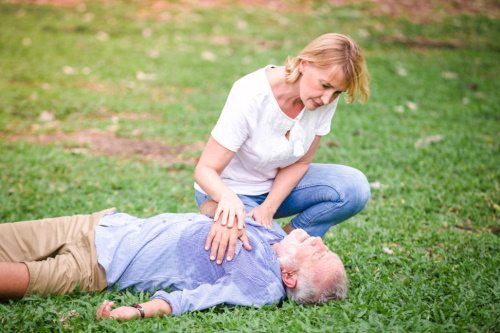
In the choking module, we practiced chest thrusts with a transfer choice and a scenario in a coffee shop with slim aisles. The deaf participant led the AED station using a fitness instructor with solid aesthetic prompts, while the interpreter voiced group questions. Evaluation made use of the same end result listing for every person: risk check, action, aid activation, compressions and AED sequence, hemorrhaging control, and healing positioning. Every person satisfied the benchmark. Two months later on, one of the mobility device individuals emailed to claim they had actually begun compressions on a relative in a recliner chair while a neighbor called emergency solutions. An AED from the lobby got here within four minutes. The person endured to discharge.
Finding your following step
If you are a possible learner, seek a first aid course that specifies its accessibility includes plainly and provides to adjust analysis without watering down standards. Ask about cpr training configurations for seated compressions, accessibility of large-print products, and whether assistance workers can participate in. If you currently hold a first aid certificate and your skills feel corroded, register in a cpr correspondence course that promises hands-on method at heights and placements that fit your body.
If you run training, audit your materials, area format, and evaluation manuscripts. Change method absolutes with purpose-focused language, develop adaptable stations, and educate your teachers to instructor flexibly while securing core criteria. If you operate in procurement, established addition needs for first aid and cpr courses in your contracts so team with impairments are not pressed to impromptu fixes.
The job is concrete and immediate. A much better table, a clearer manuscript, a second method to roll someone securely, a metronome you can really feel as opposed to hear. Make those modifications and you do more than concern a certificate. You hand individuals the self-confidence to act when it matters, with the bodies and tools they in fact have.